Few components of home infrastructure impact your daily comfort, health, and operational budget as profoundly as your heating, ventilation, and air conditioning (HVAC) system. Operating invisibly behind walls and tucked away in basements or utility closets, these complex mechanical networks work tirelessly to maintain a stable, conditioned sanctuary regardless of volatile outdoor weather cycles. However, because these systems are mechanical, they are subject to continuous wear, thermal stress, and inevitable component degradation over years of rigorous service.
For many homeowners, the true value of an HVAC unit is taken for granted until the day the airflow halts entirely during a record-breaking summer heatwave or a freezing winter snap. When a system malfunctions or experiences a severe component failure, property owners find themselves standing at a critical financial and operational crossroads: Should you invest in another targeted repair to extend the unit’s life, or is it time to commit to a total system replacement? Making the wrong decision can result in chronic mechanical headaches, wasted utility expenses, and immediate capital losses. This comprehensive guide outlines the essential variables, lifecycle calculations, and performance metrics you must evaluate to make an informed, confident decision for your home.
- Evaluating the Age and Condition of Your System
- Identifying Signs of Repeated System Problems
- Comparing Repair Costs With Long-Term Value
- Recognizing Declining Cooling Performance
- Understanding How Efficiency Affects Energy Bills
- Reviewing System Performance During Peak Seasons
- Determining Whether Problems Are Becoming More Frequent
- Consulting Professionals Before Making Major Decisions
- Assessing the Severity of Existing Cooling Issues
- Planning for Long-Term Comfort and Reliability
Evaluating the Age and Condition of Your System
The very first metric you must examine when caught between fixing or replacing a malfunctioning unit is the system’s chronological age. Like any heavy machinery, furnaces, heat pumps, and air conditioning compressors possess a fixed, predictable operational lifespan. Even if a system has been meticulously maintained with regular filter changes and seasonal cleanings, the physical materials—such as the copper coils, electrical relays, and motorized fan blades—will eventually succumb to systemic material fatigue.
As an industry standard, traditional central air conditioners and heat pumps function efficiently for roughly ten to fifteen years, while a well-built gas furnace can endure for fifteen to twenty years. If your equipment is approaching or has exceeded these operational benchmarks, investing significant capital into a targeted fix is often a short-sighted strategy. A nearby Heating company can verify the manufacture date encoded on your unit’s serial number plate and evaluate the internal condition of your heat exchanger or compressor valves. When an aging system suffers a major component breakdown, it is usually a signal that the entire machine is entering a period of terminal decline, making a modern replacement the most fiscally responsible path forward.
Identifying Signs of Repeated System Problems
An occasional mechanical failure over a decade of continuous service is completely normal and to be expected. Perhaps a capacitor degrades due to a summer power surge, or a fan belt snaps after years of continuous rotation. These are minor, isolated incidents that can be resolved quickly without jeopardizing the system’s long-term viability. However, when your home comfort relies on a continuous cycle of emergency service calls, you are no longer dealing with routine maintenance; you are witnessing systemic mechanical collapse.
If you find yourself on a first-name basis with your service technicians because you require multiple HV AC repairs every single season, your system is trapping you in a cycle of diminishing returns. Chronic issues—such as a compressor that constantly overheats, electrical boards that repeatedly short-circuit, or refrigerant lines that develop recurrent leaks—point to deep structural imbalances within the machine. Constantly paying for individual service visits, diagnostic fees, and replacement parts creates a significant financial drain that quickly surpasses the cost of a down payment on a brand-new, fully warranted heating and cooling system.
Comparing Repair Costs With Long-Term Value
To remove emotion from the decision-making process, savvy homeowners utilize a reliable mathematical formula known as the “5,000 Rule” to evaluate the financial validity of a major fix. Multiply the total cost of the proposed repair estimate by the chronological age of the HVAC unit. If the resulting number is greater than 5,000, the investment is considered mathematically unsound, and the funds should be redirected toward a total replacement. For instance, a $600 repair on a twelve-year-old system equals 7,200, signaling that a replacement is the smarter long-term financial move.
When navigating these complex financial calculations, consulting with reputable local hvac contractors allows you to view the complete lifecycle cost of your choices. Beyond the immediate invoice of a single patch, older systems carry a high risk of subsequent component failures that uncertified technicians often overlook. Furthermore, new equipment comes backed by ironclad ten-year manufacturer parts warranties, completely insulating your household budget from unexpected mechanical expenses for a decade. Looking at the long-term value ensures you are investing in permanent reliability rather than merely purchasing a temporary reprieve for a dying machine.
Recognizing Declining Cooling Performance
Your air conditioning system should be capable of lowering your home’s indoor temperature to your exact thermostat setpoint quickly, quietly, and evenly across every individual room. If your system runs continuously for hours without ever reaching the desired temperature, or if certain rooms feel like a sweltering greenhouse while others remain freezing cold, your equipment’s cooling performance has fundamentally degraded. This systemic sluggishness is a clear indicator that the compressor or evaporator coils can no longer manage heat transfer effectively.
When you notice a persistent decline in airflow velocity or temperature consistency, scheduling a targeted diagnostic with a specialist in local ac repair will reveal the root cause of the performance drop. The issue could be a simple fix, such as a clogged air filter, a faulty blower motor, or a broken thermostat calibration. However, if the technician discovers that the system’s internal aluminum cooling fins are severely corroded, or that the compressor can no longer generate the necessary pressure thresholds, the unit can no longer fulfill its primary operational purpose. Forcing a physically degraded system to labor continuously accelerates internal wear, running up your energy consumption while failing to provide daily comfort.
Understanding How Efficiency Affects Energy Bills
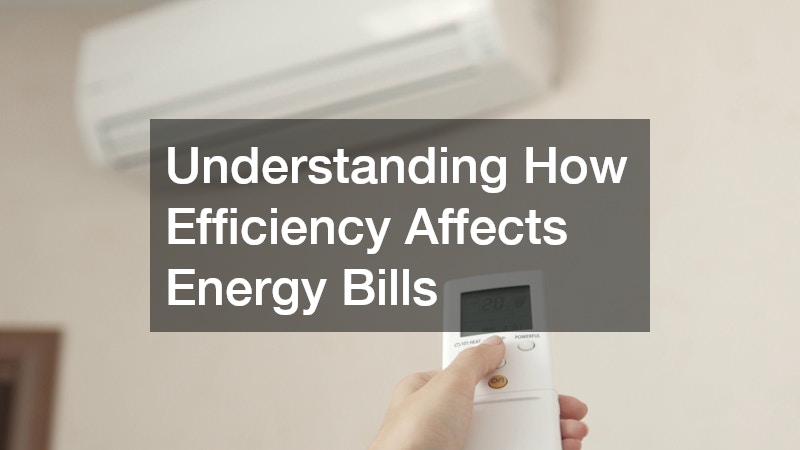
The true cost of an aging, inefficient HVAC system extends far beyond the occasional repair invoice; it manifests every single month on your household utility bills. Over the last decade, HVAC manufacturing technology has made historic leaps forward in energy efficiency. Modern air conditioners are rated by their Seasonal Energy Efficiency Ratio (SEER2), while furnaces are measured by Annual Fuel Utilization Efficiency (AFUE). Older units operating at an outdated 10 SEER rating consume up to forty percent more electricity than a modern base-model system operating at 16 or 18 SEER2.
When evaluating your remodeling or maintenance budget, reviewing your historical utility data alongside premier HVAC companies will highlight how much money an old system is actively wasting. As internal components age, motors lose their efficiency, friction increases, and coils accumulate scale, forcing the system to draw significantly more power from the electrical grid to deliver the same amount of cooling or heating. Upgrading to a high-efficiency system completely alters your monthly operational costs, allowing the new unit to partially pay for itself over time through dramatic, compounding energy savings.
Reviewing System Performance During Peak Seasons
The true test of an HVAC system’s structural health occurs during the absolute peaks of the summer and winter seasons—those intense stretches of consecutive days where outdoor temperatures hit extreme highs or freezing lows. A struggling, borderline system can often manage to condition a home during mild spring or autumn days when the thermal load is minimal. However, the moment the system is forced to run at maximum capacity for extended intervals during a heatwave, minor underlying weaknesses are violently magnified, leading to sudden, catastrophic mechanical breakdowns.
Before entering these high-stress weather windows, having a certified air conditioner contractor perform a comprehensive seasonal audit is a vital preventative strategy. Technicians can measure electrical amp draws on your fan motors, verify that refrigerant levels are precisely balanced, and clean out debris that restricts critical airflow. If your system routinely fails or “short-cycles” (turning on and off rapidly) when the outdoor weather is at its worst, it proves the equipment lacks the mechanical resilience required to defend your home safely, making an off-season replacement the safest way to prevent a mid-summer emergency.
Determining Whether Problems Are Becoming More Frequent
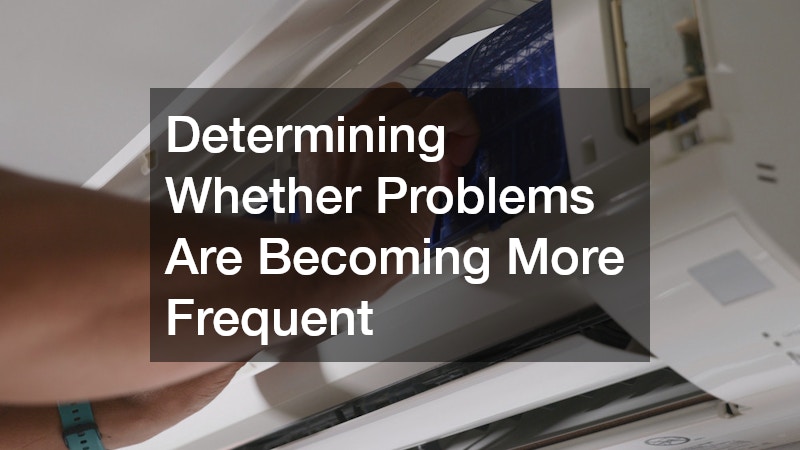
As a first-time or long-term homeowner, keeping a detailed property maintenance log is one of your greatest operational assets. Tracking exactly when your utility systems are serviced, what components were replaced, and the total cost of each event allows you to see the broader trajectory of your home’s mechanical health. Without this data, it is remarkably easy to look at each individual fix as an isolated, minor expense, blind to the reality that those expenses are rapidly accelerating in frequency.
If a review of your service logs reveals that an asset required attention once every three years, but now requires professional HVAC repairs multiple times over a twelve-month period, the machine has entered its wear-out phase. In mechanical engineering, this acceleration is part of the classic “bathtub curve” of product lifecycles, where failure rates spike dramatically near the end of an asset’s expected life. Recognizing this acceleration pattern allows you to take control of the situation proactively, scheduling a managed replacement on your own terms before the machine suffers a total, unfixable collapse that forces you into an expensive emergency purchase.
Consulting Professionals Before Making Major Decisions
The technical parameters of modern indoor climate control are highly complex, moving far beyond basic sheet metal ductwork and simple electrical wiring. Every home features a unique thermal boundary dictated by its insulation values, window square footage, ceiling heights, and local geographic orientation. Attempting to select a replacement unit or authorize an expensive mechanical overhaul without an independent load calculation can result in purchasing a system that is either oversized or undersized, leading to chronic humidity issues, short-cycling, and early system failure.
Before signing construction contracts or ordering equipment, partnering with a certified HVAC contractor for a comprehensive home evaluation is a critical step. A professional contractor will utilize Manual J load calculation software to precisely determine the exact British Thermal Units (BTUs) of heating and cooling your specific home configuration requires. They can audit your existing ductwork to ensure it can handle the airflow velocity of modern variable-speed blowers and check if your electrical panel requires upgrades. Relying on professional engineering diagnostics guarantees your capital investment is directed toward a system customized perfectly to your home’s infrastructure.
Assessing the Severity of Existing Cooling Issues
Not all air conditioning failures carry the same mechanical or financial weight. If your system stops cooling because of a failed blower belt, a burned-out contactor, or a malfunctioning smart thermostat, the issue is considered minor and localized. These fixes are highly cost-effective and should almost always be authorized, regardless of the system’s age, as they instantly restore factory functionality for a minimal financial investment.
However, if your system suffers a failure of its core internal organs, the conversation shifts entirely. Encountering a cracked heat exchanger in a furnace, a burned-out compressor motor, or a completely corroded evaporator coil requires highly intensive ac repairs that involve opening up pressurized systems and handling expensive, outdated chemical refrigerants like R-22. If your old system utilizes R-22 refrigerant—which has been completely phased out due to environmental regulations—the cost of sourcing this scarce fluid can double the price of the repair. When facing a severe, multi-thousand-dollar failure on an un-warranted machine, investing that capital into the repair is rarely a wise decision, as it leaves you with an old, inefficient unit that is still vulnerable to subsequent failures.
Planning for Long-Term Comfort and Reliability
The ultimate goal of homeownership management is the complete elimination of friction and anxiety from your daily routine. A home should be a safe, predictable sanctuary where you can relax, raise your family, and work without the constant background stress of an impending utility system failure. Choosing to fix a terminal system over and over keeps your household in a state of constant vulnerability, leaving you exposed to the threat of a total mechanical breakdown during the most inconvenient moments of the year.
Integrating high-performance Heating services and cooling system designs into your long-term property plan allows you to lock in total peace of mind for over a decade. Modern custom systems utilize advanced inverter-driven compressors that scale their power usage up or down incrementally, eliminating the loud, abrupt blasting sounds associated with older single-stage units. These systems maintain an incredibly stable interior temperature within a single fraction of a degree while continuously balancing indoor relative humidity and filtering out airborne allergens. Prioritizing mechanical reliability and indoor air quality ensures that your home remains a safe, efficient, and healthy environment for your family for many years to come.
Deciding whether to authorize another repair or commit to a total HVAC system replacement is a multifaceted financial and structural calculation that requires you to look far beyond the immediate shock of a system breakdown. By carefully evaluating your equipment through the objective lenses of chronological age, historical repair frequency, current lifecycle costs, and systemic energy efficiency, you shield your household from chronic financial waste and stress.
Treat your heating and cooling infrastructure as a long-term investment in your property’s future health and market equity. While a targeted patch from a certified Heating company is ideal for minor, isolated component failures, recognizing when a machine has entered terminal mechanical decline is the hallmark of responsible property stewardship. When you choose to replace an outdated unit with a high-efficiency system backed by elite local hvac contractors, you permanently eliminate the chronic anxiety of seasonal breakdowns. You secure lower monthly utility expenses, protect your home’s finish work from humidity damage, and establish an optimal breathing environment for your family. Take control of your home’s indoor climate potential today, choose professional diagnostic reliability over quick, temporary fixes, and enjoy the lasting comfort of a home built to stand the test of time.