A successful roofing project starts well before materials arrive or construction begins. Whether you are addressing damage, improving an aging structure, or planning a major property upgrade, thoughtful preparation can make the process more predictable and help prevent costly surprises. Understanding your property’s needs, establishing a realistic budget, selecting appropriate materials, and choosing qualified professionals are all important steps.
Taking time to plan also gives you an opportunity to establish expectations about the project’s scope, schedule, communication, and final results. The more prepared you are before work starts, the easier it can be to make informed decisions throughout the project.
- Start With a Thorough Assessment of Your Roof
- Determine Whether Repair or Full Replacement Makes Sense
- Set Clear Project Goals Before Getting Estimates
- Build a Realistic Roofing Budget
- Compare Materials Based on Performance and Property Needs
- Verify Materials and Supplies Before Work Begins
- Choose the Right Professional for the Job
- Review Every Estimate and Contract Carefully
- Understand the Installation Process From Start to Finish
- Plan Around Weather, Scheduling, and Property Access
- Know What to Expect During the Project
- Take Extra Precautions With Commercial Projects
Start With a Thorough Assessment of Your Roof
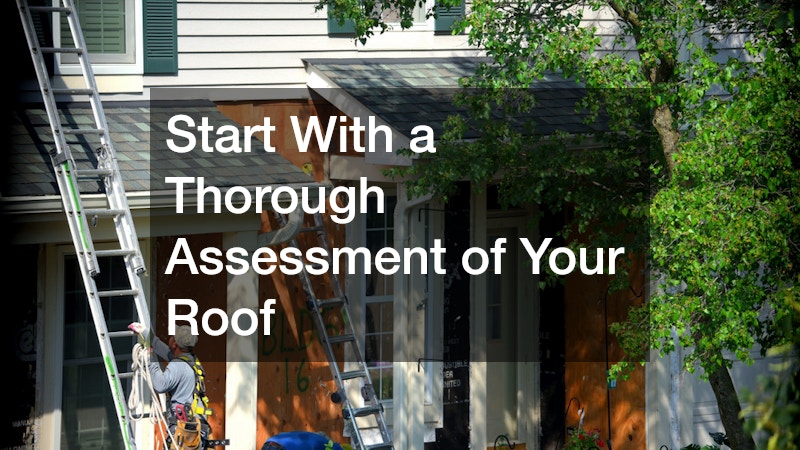
Before deciding what work needs to be completed, begin with a careful assessment of the existing roof. Some problems are obvious, while others may only become apparent during a professional inspection. Looking beyond visible damage can help you understand whether you are dealing with an isolated issue or a larger underlying problem.
Look for signs such as:
- Missing, cracked, curling, or damaged shingles
- Water stains on ceilings or walls
- Damp insulation or wood in the attic
- Sagging sections
- Damaged or deteriorated flashing
- Excessive moss or algae
- Granules collecting in gutters
- Visible daylight through the roof deck
- Areas where previous work appears poorly installed
Interior symptoms can be particularly useful because water does not always enter directly above the area where a stain appears. Moisture can travel along decking, insulation, and framing before becoming visible inside the building.
A professional assessment can provide a more complete picture of the roof’s condition. The evaluation should consider the roof covering, underlying decking, flashing, ventilation, drainage, and areas around penetrations such as chimneys, skylights, and vents.
Determine Whether Repair or Full Replacement Makes Sense
Once the roof has been assessed, determine whether repairing individual problems is appropriate or whether a more comprehensive project is justified. Minor damage does not necessarily mean the entire roof needs to be replaced. However, repeatedly addressing problems on an aging system may not always be the most practical long-term approach.
When considering roof repairs, think about the size and location of the damage, the overall condition of the roof, its age, and how frequently problems have occurred. A localized leak caused by damaged flashing may be relatively straightforward to address, while widespread deterioration, extensive water damage, or structural concerns can require a different strategy.
A roof replacement may make more sense when:
- The roof is approaching or beyond its expected service life.
- Damage is widespread rather than isolated.
- Previous repairs have become frequent.
- Moisture has affected significant portions of the underlying structure.
- The existing materials are no longer readily available.
- Maintaining the existing system would cost substantially more over time.
Ask the professional evaluating the property to explain the reasoning behind the recommendation. A trustworthy assessment should distinguish between problems that require immediate attention and improvements that can reasonably be scheduled later.
Set Clear Project Goals Before Getting Estimates
Before requesting proposals, identify what you want the project to accomplish. Having clearly defined goals allows you to communicate your priorities and makes it easier to compare different recommendations.
For example, your primary goal might be to address leaks before the next storm season. Alternatively, you may be planning a larger improvement intended to increase durability, improve energy performance, update the property’s appearance, or prepare the building for future use.
For residential roofing projects, property owners should consider how their choices fit the home’s overall design and long-term needs. Factors such as architectural style, climate, maintenance expectations, and neighborhood characteristics may influence material selection.
Write down your priorities before meeting with professionals. Consider:
- Problems that must be addressed immediately
- Improvements that would be beneficial but are not urgent
- Desired materials or appearance
- Preferred project timing
- Budget limitations
- Long-term maintenance expectations
- Warranty preferences
A written list helps prevent important considerations from being overlooked when discussions become focused on price or scheduling.
Build a Realistic Roofing Budget
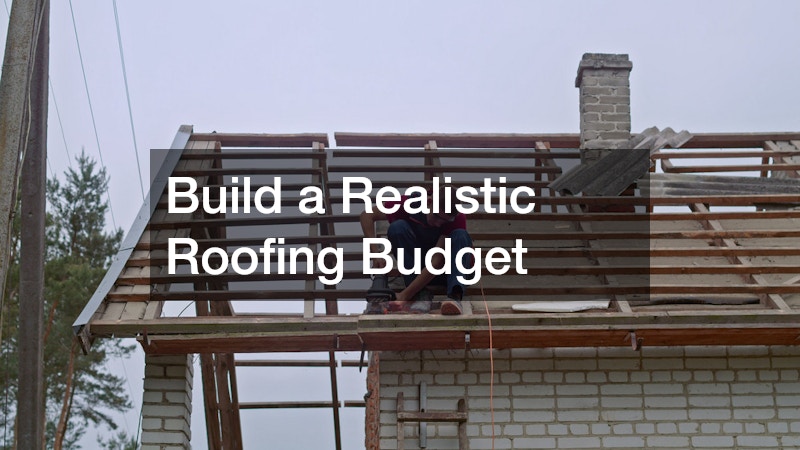
Price is an important consideration, but the initial estimate should not be the only factor used to evaluate a project. Roofing costs can vary considerably depending on the property’s size, roof design, accessibility, materials, labor requirements, and condition of the underlying structure.
The estimate may also change if damaged decking or structural components are discovered after existing materials are removed. For that reason, it is wise to maintain some financial flexibility rather than budgeting only for the expected base cost.
Ask for a detailed estimate that separates major expenses. Depending on the project, these may include:
- Removal and disposal of existing materials
- New roofing materials
- Underlayment
- Flashing
- Ventilation components
- Labor
- Permits
- Repairs to the underlying structure
- Cleanup and disposal
- Additional accessories or upgrades
Avoid automatically choosing the lowest bid. An unusually low estimate may omit necessary work, use lower-quality materials, or fail to account for potential complications.
Instead, compare proposals based on the complete scope of work, materials, warranties, experience, and communication. A slightly higher initial investment may provide better long-term value if it results in quality workmanship and durable materials.
Compare Materials Based on Performance and Property Needs
Roofing materials should be selected based on more than color and appearance. Different materials have different characteristics, including expected service life, maintenance requirements, weight, weather resistance, and installation requirements.
Metal roofing services, for example, may be considered when a property owner wants a durable option with a particular appearance or performance profile. Metal systems come in various styles and finishes, so it is important to evaluate the specific product rather than treating all metal roofing as identical.
When comparing materials, consider:
- Expected lifespan
- Resistance to wind and severe weather
- Maintenance requirements
- Weight and structural requirements
- Energy performance
- Fire resistance
- Appearance
- Manufacturer warranty
- Availability of replacement components
- Compatibility with the existing structure
Your property’s climate should also influence the decision. A material that performs well in one environment may have different maintenance or installation considerations elsewhere.
Ask your professional to explain the advantages and limitations of each option. This allows you to select a system based on your property’s actual requirements rather than simply choosing the most popular or least expensive material.
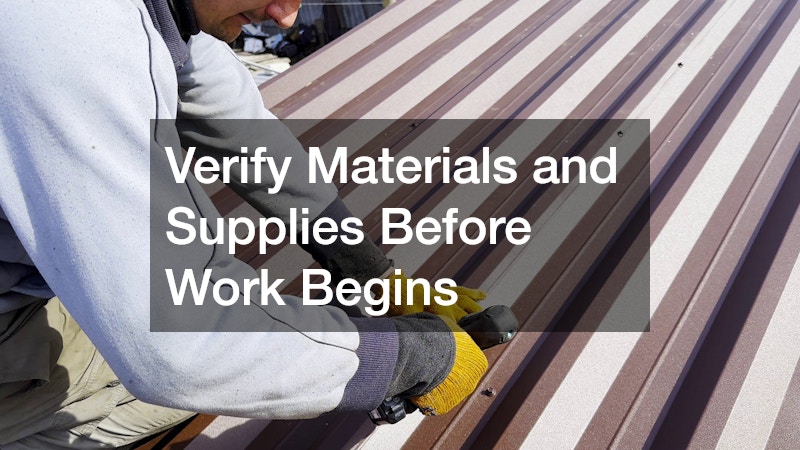
Verify Materials and Supplies Before Work Begins
Material availability can affect both scheduling and project continuity. Before signing a contract, confirm which products will be used and whether they are available within the project’s expected timeframe.
A roofing supply order may include much more than the primary roof covering. Underlayment, flashing, fasteners, ventilation products, sealants, edging, and other components all contribute to the performance of the finished system.
Confirm the exact specifications of important materials, including:
- Manufacturer and product line
- Material type
- Color and finish
- Warranty terms
- Required accessories
- Underlayment specifications
- Ventilation components
- Flashing materials
Using compatible components is particularly important. Roofing systems are designed to work as a complete assembly, and substituting inappropriate materials can potentially affect performance or warranty coverage.
If a particular product is unavailable, ask what alternative will be used and whether the substitute changes the project’s cost, appearance, performance, or warranty.
Choose the Right Professional for the Job
The people performing the work can have as much impact on the outcome as the materials themselves. When evaluating roofers, look beyond advertising and pricing. Investigate experience, qualifications, insurance, references, and communication practices.
A roofing contractor should be able to explain the proposed work clearly and provide documentation covering important aspects of the project. Requirements vary by location, so property owners should understand applicable licensing and insurance requirements before work begins.
Ask prospective professionals:
- How long have you been performing this type of work?
- Do you have experience with my specific roofing material?
- Are you properly licensed where required?
- Can you provide proof of insurance?
- Can you provide references?
- Who will supervise the project?
- What warranties are included?
- How are unexpected repairs handled?
- Who is responsible for permits?
- How will weather-related delays be communicated?
Be cautious about professionals who pressure you to sign immediately, refuse to provide written details, request unusually large upfront payments, or provide vague answers about the work.
A good professional should welcome reasonable questions. Clear communication at the beginning can help establish a productive relationship throughout the project.
Review Every Estimate and Contract Carefully

Never rely solely on verbal agreements for a major construction project. Before signing, carefully review the written proposal and make sure it reflects what was discussed.
A detailed contract should clearly identify the scope of work and the materials being installed. It should also explain payment expectations, scheduling, warranties, cleanup, and procedures for handling changes.
Pay particular attention to:
- Total project price
- Deposit and payment schedule
- Materials and quantities
- Labor responsibilities
- Estimated start and completion dates
- Permit responsibilities
- Cleanup and debris removal
- Warranty information
- Change-order procedures
- Responsibility for unexpected structural repairs
If something is unclear, ask for an explanation before signing. Written clarification is preferable to relying on a conversation that may be remembered differently later.
You should also understand what happens if additional damage is discovered after work begins. A clearly defined change-order process can reduce confusion when unexpected conditions require additional labor or materials.
Understand the Installation Process From Start to Finish
Understanding the basic roofing installation process helps property owners know what to expect once construction begins. While procedures vary depending on the building and material, most projects involve several important stages.
The process may include:
- Preparing the property and protecting surrounding areas
- Delivering and organizing materials
- Removing existing roofing materials when necessary
- Inspecting the underlying deck
- Addressing damaged structural components
- Installing underlayment
- Installing flashing and edge components
- Installing the primary roofing material
- Completing ventilation and penetration details
- Performing a final inspection
- Removing debris and cleaning the property
The condition of the underlying deck deserves particular attention. Installing new materials over damaged structural components can create problems later, which is why reputable professionals inspect exposed areas before proceeding.
Ventilation is another important consideration. A properly designed system can help manage heat and moisture within the attic or roof assembly. Ask how ventilation will be evaluated and whether modifications are necessary as part of the project.
Plan Around Weather, Scheduling, and Property Access
Weather can have a major influence on project scheduling. Rain, high winds, extreme temperatures, and other conditions may affect when certain work can safely or effectively be performed.
Discuss weather contingencies with your professional before the project begins. Find out how the work area will be protected if conditions change and how delays will affect the anticipated completion date.
Property access should also be planned in advance. Roofing projects can involve deliveries, equipment, ladders, debris containers, and workers moving around the property.
Prepare by:
- Moving vehicles away from active work areas
- Relocating fragile outdoor items
- Trimming or protecting landscaping when appropriate
- Keeping children and pets away from construction areas
- Identifying areas that workers need to access
- Informing occupants about expected noise
- Establishing where materials and debris will be placed
For businesses, scheduling may require additional coordination to minimize disruption to customers, employees, and daily operations.
Know What to Expect During the Project
Once work begins, consistent communication becomes especially important. Establish a primary contact who can answer questions and provide updates.
A roofing service provider should be able to communicate changes in schedule, unexpected findings, and progress throughout the project. Property owners should not hesitate to ask questions when something differs from the original plan.
If additional work becomes necessary, request a written explanation that identifies:
- What was discovered
- Why additional work is necessary
- How the work will be performed
- How much it will cost
- Whether the schedule will change
- Whether warranties are affected
Avoid approving substantial changes without understanding their financial and practical consequences.
Keeping photographs and copies of estimates, contracts, receipts, warranty documents, and change orders can also make it easier to maintain an accurate record of the project.
Take Extra Precautions With Commercial Projects
Commercial properties often require more extensive planning because roofing work can affect employees, customers, equipment, tenants, and daily business operations. The larger size of many commercial buildings can also introduce additional logistical challenges.
Commercial roofers should be prepared to discuss how the project will be coordinated around the property’s operations.
Before work begins, establish:
- Approved work hours
- Access and parking requirements
- Employee and customer safety procedures
- Material delivery locations
- Equipment placement
- Rooftop equipment considerations
- Communication procedures
- Emergency contacts
- Expected disruptions
- Cleanup expectations
If the building contains HVAC equipment, electrical systems, signage, or other rooftop components, confirm how these areas will be protected during construction.
Business owners should also determine whether permits, inspections, tenant notifications, or other administrative requirements apply. Planning these details early can help prevent avoidable interruptions.
Planning a roofing project carefully can make a significant difference in the overall experience and long-term performance of the finished system. Starting with an accurate assessment, defining your goals, establishing a realistic budget, comparing appropriate materials, and selecting qualified professionals creates a stronger foundation for the work.
Clear contracts, thoughtful scheduling, good communication, and careful final inspections can further reduce misunderstandings and unexpected complications. Most importantly, treating the project as a long-term investment rather than a quick repair can help you make decisions that support the property’s needs for years to come.