
A surprise system failure rarely happens out of nowhere. Most emergency repairs trace back to a small warning sign that went unnoticed for months, sometimes years. By building a simple seasonal routine around your home’s major systems, you can catch problems while they’re still cheap, minor fixes instead of middle-of-the-night emergencies.
This checklist walks through the key areas of your home that deserve a yearly look before they force an unplanned call for help.
- Inspect Your Cooling System Before Summer Arrives
- Schedule a Full Heating and Cooling System Tune-Up
- Check Your Roof Structure for Hidden Damage
- Clear Gutters and Downspouts Every Fall and Spring
- Test Your Septic System Before It Backs Up
- Examine Exterior Siding for Cracks and Moisture Entry
- Prepare a Safe Room or Storm Shelter for Severe Weather
- Watch for Early Warning Signs in Your Plumbing System
- Plan Ahead for Larger Seasonal Cleanup and Renovation Projects
- Conclusion
Inspect Your Cooling System Before Summer Arrives
Your air conditioning system works hardest during the months you can least afford for it to fail. A yearly inspection before the first heat wave gives you time to address worn components without sweating through a breakdown. Dirty coils, low refrigerant, and clogged filters are among the most common reasons a unit stops cooling efficiently, and all of them are easy to catch with a pre-season checkup.
Scheduling air conditioning repair in spring rather than mid-July also tends to save money, since demand for service is lower and parts are easier to source. Waiting until the unit fails completely often means a longer wait time and a higher repair bill. Booking AC repair at the first sign of trouble, rather than waiting for a total breakdown, is almost always the more affordable route. A few minutes of attention now can mean the difference between a quick tune-up and a full system replacement later.
- Replace or clean air filters every one to three months
- Clear leaves and debris from the outdoor condenser unit
- Check that vents and registers are not blocked by furniture
- Listen for unusual rattling, grinding, or clicking sounds during startup
- Monitor your energy bills for sudden, unexplained increases
Schedule a Full Heating and Cooling System Tune-Up

Beyond basic filter changes, your entire heating and cooling system benefits from a professional once-a-year evaluation. An experienced HVAC contractor can spot early signs of wear in the blower motor, ductwork, and thermostat calibration that most homeowners would never notice on their own. These small adjustments keep the system running efficiently and extend its overall lifespan by years.
Annual maintenance agreements are also worth considering if you want predictable costs and priority scheduling. Many contractors offer discounted rates for customers who commit to seasonal visits, which often pays for itself through improved energy efficiency alone. Think of this appointment as preventive care for one of the most expensive systems in your home.
- Ask for a written inspection report after every visit
- Request duct inspection if rooms heat or cool unevenly
- Verify refrigerant levels are within manufacturer specifications
- Confirm the thermostat is reading temperatures accurately
- Keep maintenance records in case of warranty claims
Check Your Roof Structure for Hidden Damage
Roof problems often develop slowly, hidden beneath shingles or tiles where homeowners rarely look. A yearly inspection, ideally after winter storms or heavy wind events, can reveal loose flashing, cracked seals, or soft spots that signal deeper trouble. Catching these issues early prevents water intrusion that can damage insulation, drywall, and electrical systems. Start with a pair of binoculars from the ground rather than climbing up right away—look for missing or curling shingles, dark streaks that suggest algae or trapped moisture, and sagging areas along the roofline. If you do go up (or hire a professional, which is safer for steep or multi-story roofs), check flashing around chimneys, vents, and skylights, since these joints are the most common entry points for leaks.
Inside the attic, bring a flashlight and look for daylight peeking through the roof boards, water stains on rafters, or damp, matted insulation. Musty odors or visible mold growth are early warning signs that moisture has been accumulating for a while, even if you haven’t noticed a leak indoors yet. Pay attention to granule loss in gutters, which indicates shingles are aging and losing their protective coating, and check for soft or spongy spots underfoot if you walk the roof, as these often mean rotting decking beneath. Addressing minor repairs—like resealing flashing or replacing a handful of shingles—typically costs a few hundred dollars, while neglected damage can lead to full roof replacement or interior repairs running into the thousands.
Before any damage becomes visible from inside your home, your roof’s structure is often already under stress. Start by checking your attic for telltale signs: daylight peeking through boards, sagging rafters, water stains, or a musty smell that suggests trapped moisture. Catching these issues early can mean the difference between a minor repair and a full structural overhaul. For homeowners considering a roof replacement, it’s worth asking a contractor about roof metal decking as an alternative to traditional plywood sheathing. Metal decking offers better resistance to moisture, pests, and warping over time, which can reduce the frequency of structural repairs down the road. It also tends to hold up better in regions prone to heavy rain, high humidity, or termite activity, where plywood sheathing can deteriorate within a decade or two.
That said, metal decking isn’t the right fit for every budget or home style, and it typically carries a higher upfront cost than plywood. A qualified contractor can walk you through the trade-offs based on your climate, roof pitch, and the age of your current structure. Even if a full replacement isn’t on your radar this year, understanding your roof’s underlying structure helps you make smarter decisions when the time does come.
- Look for missing, curling, or cracked shingles from the ground, using binoculars to spot granule loss or exposed black patches
- Check the attic for water stains, dark mold spots, or daylight coming through the roof boards
- Inspect chimney flashing and vent boots for cracking, rust, or gaps where sealant has worn away
- Note any sagging areas along the roofline or ridge that could indicate structural weakness or rotting decking
- Examine gutters for granules, which signal shingle wear, and clear debris that can trap moisture
- Check attic insulation for proper coverage, since gaps can cause ice dams and roof damage in winter
- Keep a record of the roof’s age, material type, and last inspection date, since most asphalt roofs last 20-25 years
Clear Gutters and Downspouts Every Fall and Spring
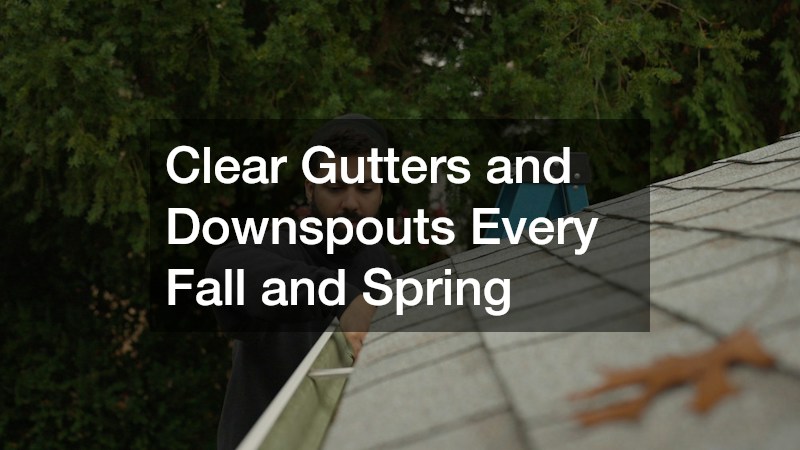
Gutters are easy to forget until they overflow directly onto your foundation or siding. Twice-yearly cleaning, once in fall after leaves drop and again in spring, prevents clogs that lead to water damage, ice dams, and even basement flooding. Standing water in clogged gutters can also attract pests and accelerate rust or rot in the gutter system itself.
Installing a gutter guard system can significantly cut down on how often manual cleaning is needed, especially for homes surrounded by trees. While guards reduce debris buildup, they still require occasional inspection to make sure small particles like pine needles or shingle grit haven’t slipped through. Think of a gutter guard as a maintenance reducer, not a complete replacement for yearly checks.
- Check for sagging sections or pulled-away brackets
- Confirm downspouts direct water at least five feet from the foundation
- Look for splash erosion patterns near the base of the home
- Inspect for granules from asphalt shingles collecting in the gutter
- Test water flow with a hose if rainfall has been light
Test Your Septic System Before It Backs Up
Homes on a septic system often only think about it once something goes wrong, which is usually the most expensive time to deal with it. Routine septic pumping every three to five years, depending on household size and tank capacity, prevents solids from building up and clogging the drain field. A backed-up system doesn’t just smell unpleasant; it can also mean costly excavation work if waste has already damaged the surrounding soil.
Slow drains, gurgling pipes, or unusually lush patches of grass over the drain field are all early warning signs worth taking seriously. Keeping a log of pumping dates and any noticeable changes in system performance makes it easier to plan ahead rather than react to an emergency. A little attention here protects both your plumbing and your yard.
- Avoid flushing wipes, grease, or chemicals down the drain
- Keep heavy vehicles and structures off the drain field
- Space out laundry loads to avoid overwhelming the tank
- Have the tank inspected if drains start running slowly
- Mark the tank location for easy access during future service
Examine Exterior Siding for Cracks and Moisture Entry

Siding acts as your home’s first line of defense against wind, rain, and temperature swings, so a yearly walk-around is worth the half hour it takes. Look closely at seams, corners, and areas near windows where moisture is most likely to sneak in. Small cracks or warping might seem cosmetic at first, but they often lead to rot or mold growth behind the surface if left unaddressed.
If you notice widespread damage or suspect moisture has already gotten behind the panels, it’s worth getting an opinion from siding contractors rather than patching the problem yourself. Professionals can identify whether the issue is isolated or part of a larger moisture problem affecting the home’s sheathing. Catching this early is almost always cheaper than waiting for a full section to need replacement.
- Press on soft-looking areas to check for hidden rot
- Look for peeling paint or bubbling, which can signal trapped moisture
- Check caulking around windows and doors for gaps
- Watch for discoloration that may indicate mold growth
- Note any pest activity, such as woodpecker holes or insect trails
Prepare a Safe Room or Storm Shelter for Severe Weather
Severe weather preparedness is often overlooked until a storm is already on its way, but a yearly check of your safety plan can make a real difference. If you live in an area prone to tornadoes or hurricanes, verifying that your storm shelters are accessible, stocked, and structurally sound should be part of your annual routine. Stale emergency supplies or a blocked entrance can turn a good plan into a dangerous scramble when minutes matter.
Even without a dedicated shelter, every household should have a designated safe space and a plan everyone understands. Walking through the plan once a year, especially before your region’s peak storm season, keeps the information fresh for every family member. Preparedness is one of those tasks that costs very little time now but can matter enormously later.
- Check flashlights, batteries, and weather radios for working condition
- Restock water and non-perishable food annually
- Confirm first aid supplies haven’t expired
- Clear any debris blocking shelter doors or hatches
- Review the family emergency plan together each year
Watch for Early Warning Signs in Your Plumbing System

Plumbing issues rarely start as emergencies; they usually begin as a small drip, a slow drain, or a faint odor that’s easy to ignore. An annual walkthrough of visible pipes, under sinks, and around water heaters can catch corrosion or minor leaks before they turn into burst pipes. Checking water pressure and listening for unusual sounds in the walls can also reveal issues hiding behind drywall.
When something does seem off, bringing in licensed plumbers for a professional evaluation is far cheaper than waiting for a pipe to fail completely. They can also flush your water heater, which extends its lifespan and improves efficiency, something many homeowners forget to schedule. A proactive relationship with a trusted plumbing professional means faster service when you do need it.
- Check under sinks for moisture or mineral buildup
- Test water pressure at multiple faucets
- Flush the water heater annually to remove sediment
- Inspect exposed pipes in basements or crawl spaces for corrosion
- Know the location of your main water shutoff valve
Plan Ahead for Larger Seasonal Cleanup and Renovation Projects
Annual maintenance sometimes uncovers bigger projects, like replacing old siding, clearing out a damaged deck, or doing a deep garage cleanout. For jobs that generate more debris than your regular trash service can handle, renting a dumpster ahead of time keeps the project organized and prevents piles of material from sitting in your yard for weeks. Planning the size and delivery window in advance also tends to be more cost-effective than scrambling once a project is already underway.
Dumpster rentals come in a range of sizes, so it helps to estimate your debris volume before committing to one. A roofing project, for example, generates very different waste than a basement cleanout, and choosing the wrong size either wastes money or leaves you needing a second rental. Factoring this into your yearly planning makes larger projects far less stressful.
- Measure or estimate debris volume before choosing a size
- Check local permit requirements for placing a dumpster on the street
- Ask about weight limits to avoid overage fees
- Schedule delivery and pickup around your project timeline
- Keep walkways clear for safety during loading
Conclusion
None of these tasks require advanced skills or a full weekend to complete, but together they form a safety net that protects your home and your wallet. Walking through this checklist once or twice a year turns surprise breakdowns into manageable, planned maintenance. Start with the systems that feel most overdue for attention, and build the rest into your calendar so next year’s routine takes even less effort.